ISLAND CULTURE & COMMUNITIES
North Atlantic island settlements maintain distinct social customs shaped by collective marine risk, seasonal isolation, and crofting land tenure.
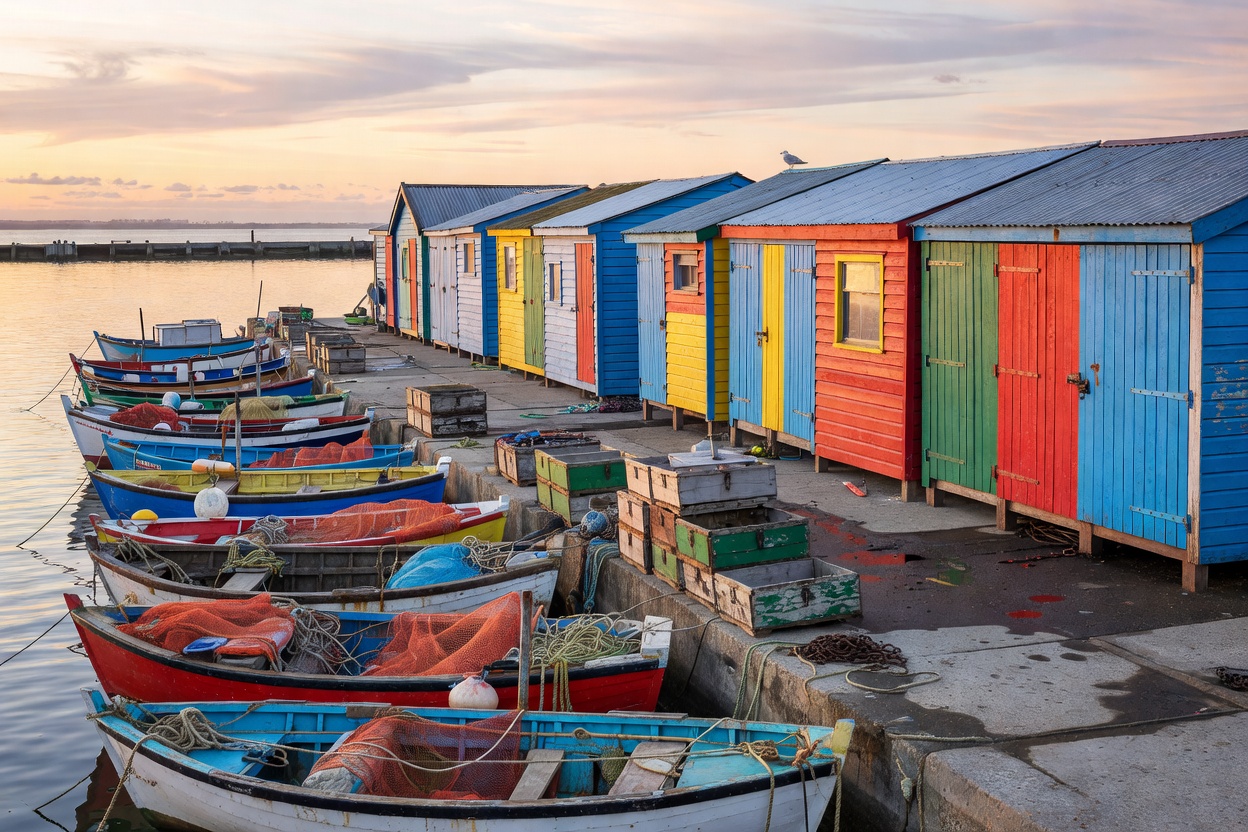
Maritime Livelihoods & Resource Economics
Human survival on small North Atlantic islands has historically depended on combining inshore fishing with small-scale livestock husbandry. In the Hebrides, this evolved into statutory crofting tenure, where families cultivate small individual plots while sharing vast upland peat common grazings. In the Faroes and coastal Norway, fjord fishing, aquaculture, and communal sheep roundups (fjallgongur) structure the annual calendar.
Economic survival demands high occupational multiplicity. A single resident may work as a commercial crab boat crewman, municipal snowplow driver, voluntary lifeboat volunteer, and guesthouse host. Specialization is impractical where population size cannot support rigid division of labor.
Settlement Structure and Communal Infrastructure
Housing clusters do not follow mainland grid structures. Settlements follow natural terrain contours to maximize wind shelter and access to sheltered water landings. In older crofting townships, homes are linear, positioned on arable coastal slopes above intertidal zones, leaving waterlogged plateaus for grazing.
Communal life centers on a small number of shared physical spaces: the harbor pierhead, the community hall, the local cooperative shop, and the volunteer fire or rescue station. In small communities of 150 to 500 people, volunteerism is mandatory; municipal services depend on residents responding to coastal emergency calls, maintaining pier lights, and operating snow clearing gear.
Language, Dialect, and Cultural Continuity
Physical isolation has protected unique linguistic pockets across the North Atlantic arc:
- Scottish Gaelic (Gàidhlig): Still spoken in day-to-day community life across the Outer Hebrides (Lewis, Harris, the Uists, and Barra), supported by bilingual signage and Gaelic-medium schooling.
- Faroese (Føroyskt): A distinct West Scandinavian language derived from Old West Norse, spoken continuously by roughly 54,000 people across 18 islands.
- Regional Dialects: Distinct coastal accents and specialized vocabularies in Shetland, Orkney, and coastal Norway that preserve extensive nautical terminology.
Socio-Economic Settlement Metrics
| Region / Setting | Primary Language / Dialect | Dominant Land Tenure | Key Communal Asset |
|---|---|---|---|
| Outer Hebrides | Scottish Gaelic / English | Crofting Acts / Community Trusts | Township Common Grazing & Hall |
| Faroe Islands | Faroese / Danish | King's Land lease & Freehold | Harbor Quay & Processing plant |
| Vestmannaeyjar | Icelandic | Municipal Freehold | Volcanic harbor breakwater |
| Lofoten Outer Isles | Norwegian (Nordland dialect) | Smallholding & Commercial harbor | Fish drying racks (Hjell) |
Seasonal Demographic Fluctuations
Small island populations experience dramatic swings between July and January. In high summer, returning university students, seasonal hospitality workers, construction crews, and independent travelers increase the resident count significantly. Community infrastructure operates at peak capacity.
By late October, ferry frequencies drop, tourism operations shutter, and the islands enter long, dark winter cycles. Community events shift indoors to township halls: ceilidhs, choral rehearsals, card clubs, and local winter sports. This quiet phase is essential for social cohesion, allowing residents to maintain personal bonds strained during the busy summer season.
Visitor Etiquette & Responsible Conduct
Visiting small island communities requires careful awareness that the landscape is an active working workplace, not an open-air museum:
- Gate Protocols: Keep all sheep gates closed securely at all times. Escaped livestock cause township grazing conflicts and roadside collisions.
- Dogs: Keep dogs on short leashes everywhere. Sheep-worrying carries strict legal penalties and warrants immediate shooting of offending dogs by farmers.
- Privacy: Croft yards and harbor net sheds are private commercial spaces; do not photograph private dwellings or working gear without explicit permission.
- Local Economy: Purchase groceries and marine supplies from local island community shops rather than shipping everything over from mainland supermarkets.
Good For
- Observing living maritime traditions and functional communal teamwork.
- Engaging with minority high-latitude linguistic traditions directly.
- Purchasing authentic, locally produced woolens, tweeds, and seafood.
- Quiet, respectful cultural research away from industrial mass tourism.
What To Know
- Sunday observance remains strict in certain islands; shops and fuel pumps remain closed.
- Intense local curiosity: strangers are noticed immediately in small townships.
- Housing markets are severely constrained; wild camping rules must be respected.
- Do not expect commercial entertainment or fast food franchises.