NORTH ATLANTIC ISLAND TRAVEL
Access to smaller North Atlantic islands is governed by sea states and visibility minimums. Built-in time buffers of 24 to 72 hours are essential for any crossing itinerary.
Route Planning Realities
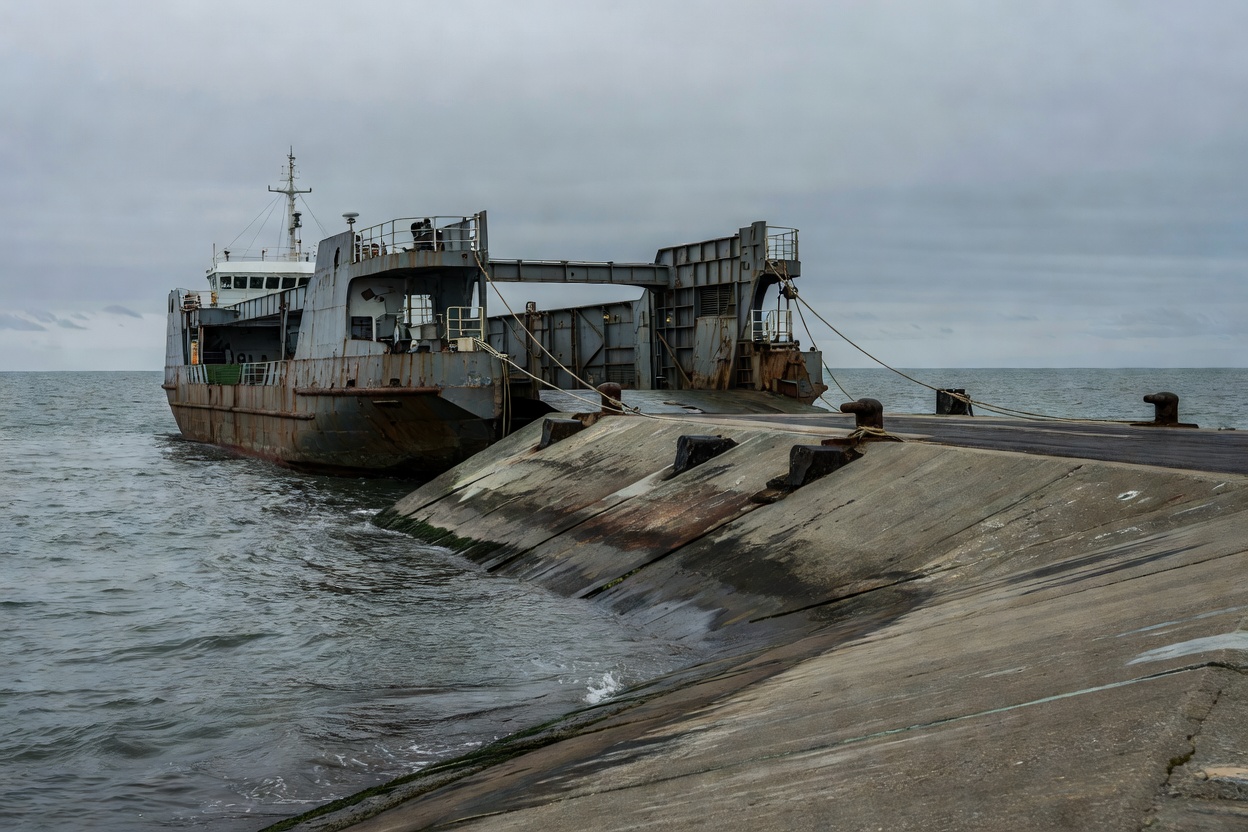
Travel to smaller islands in the North Atlantic differs fundamentally from mainland rail or highway transit. Routes are non-redundant. If a ferry sailing is canceled due to heavy surge in a breakwater entrance, there is rarely an alternative route. Travelers must construct itineraries with mandatory buffer days before flight connections or onward travel commitments.
Planning requires verifying current operational status with local vessel operators and air transport authorities immediately before departure. Never assume scheduled departures run as printed during transitional shoulder seasons.
Ferry Operations & Sea-State Limits
Most smaller inhabited islands rely on steel-hulled Roll-on/Roll-off (Ro-Pax) passenger and freight vessels. These ships handle open ocean swells comfortably, but berthing limitations determine whether a crossing takes place. In open roadsteads or concrete pier berths without inner docks, high swell causes vessels to surge heavily against fenders, risking damage to mooring lines and vehicle ramps.
Tidal amplitude is an additional factor. In regions such as the Scottish Western Isles or the Bay of Fundy approach, tidal range exceeds 4 to 5 meters. Ferry slips may only be operable during specific hours of the tide cycle. Vehicle drivers must book space weeks in advance for summer transits, as island supply trucks take priority over personal cars.
Short-Field Aviation (STOL & Helicopters)
Where maritime transit takes too long or sea states are consistently severe, regional island systems use Short Takeoff and Landing (STOL) aircraft, such as the DHC-6 Twin Otter, Britten-Norman Islander, or public utility helicopters. Runways are often paved strips under 800 meters long, or in some instances, compacted tidal cockle-shell sands (as at Barra in the Hebrides).
Luggage limits on these feeder flights are strictly enforced. Standard passenger allowances typically cap checked bags at 15 kg total. Carry-on baggage must fit under small cabin seats. Crosswinds and low-lying coastal sea fog (haar) cause frequent flight delays, requiring passengers to maintain flexible travel schedules.
Transit Category Protocol
| Transport Mode | Vulnerability Factor | Luggage Strictness | Recommended Advance Booking |
|---|---|---|---|
| Ro-Pax Vehicle Ferry | Harbor swell & wind surge | Standard vehicle capacity | 4 to 12 weeks (Summer vehicle) |
| Passenger Fast Craft | Significant wave height (>2.5m) | Strict 15–20kg per person | 1 to 3 weeks |
| Island Feeder Flight (STOL) | Crosswind & runway visibility | Strict 15kg cap (Overweight fees) | 6 to 16 weeks |
| Local Utility Helicopter | Fog, icing, severe gust | Strict 10–15kg cap | Resident priority; check locally |
Ground Transport & Single-Track Etiquette
Road systems on smaller islands are predominantly single-track asphalt with designated passing places every 100 to 200 meters. Visitors driving rental vehicles must follow clear rules of etiquette:
- The vehicle closest to a passing place must pull in to let oncoming traffic pass.
- Never cross the roadway to pull into a passing place on your right; instead, stop directly opposite it on the left.
- Allow faster-moving local traffic, emergency vehicles, and commercial delivery vans to overtake promptly.
- Free-roaming sheep and lambs graze roadside verges without fencing; drive with deliberate caution in low visibility.
Supplies, Accommodation, and Self-Sufficiency
Hotels are rare on smaller islands; lodging is primarily limited to small guesthouses, self-catering croft houses, and bunkhouses. All accommodation must be booked well in advance. Turning up without reservations strains limited local infrastructure.
General stores typically operate on restricted opening hours and do not open on Sundays in some traditional communities. Food availability reflects freight ferry schedules. Carry essential personal medications, dry emergency rations, and offline mapping tools, as mobile data coverage drops off sharply in remote inlets.
Good For
- Experiencing real-world expedition logistics and maritime seamanship.
- Slow, immersive travel centered on natural daylight cycles and tides.
- Scenic single-track driving with uninterrupted coastal views.
- Appreciation of isolated community infrastructure and supply chains.
What To Know
- Fixed travel schedules fail frequently; contingency buffers are not optional.
- Vehicle rental contracts often prohibit ferry transits without written approval.
- Fuel stations are scarce and often close early or rely on automated card pumps.
- Emergency medical evacuation is by maritime lifeboat or SAR helicopter only.