NORTH ATLANTIC ISLAND WEATHER
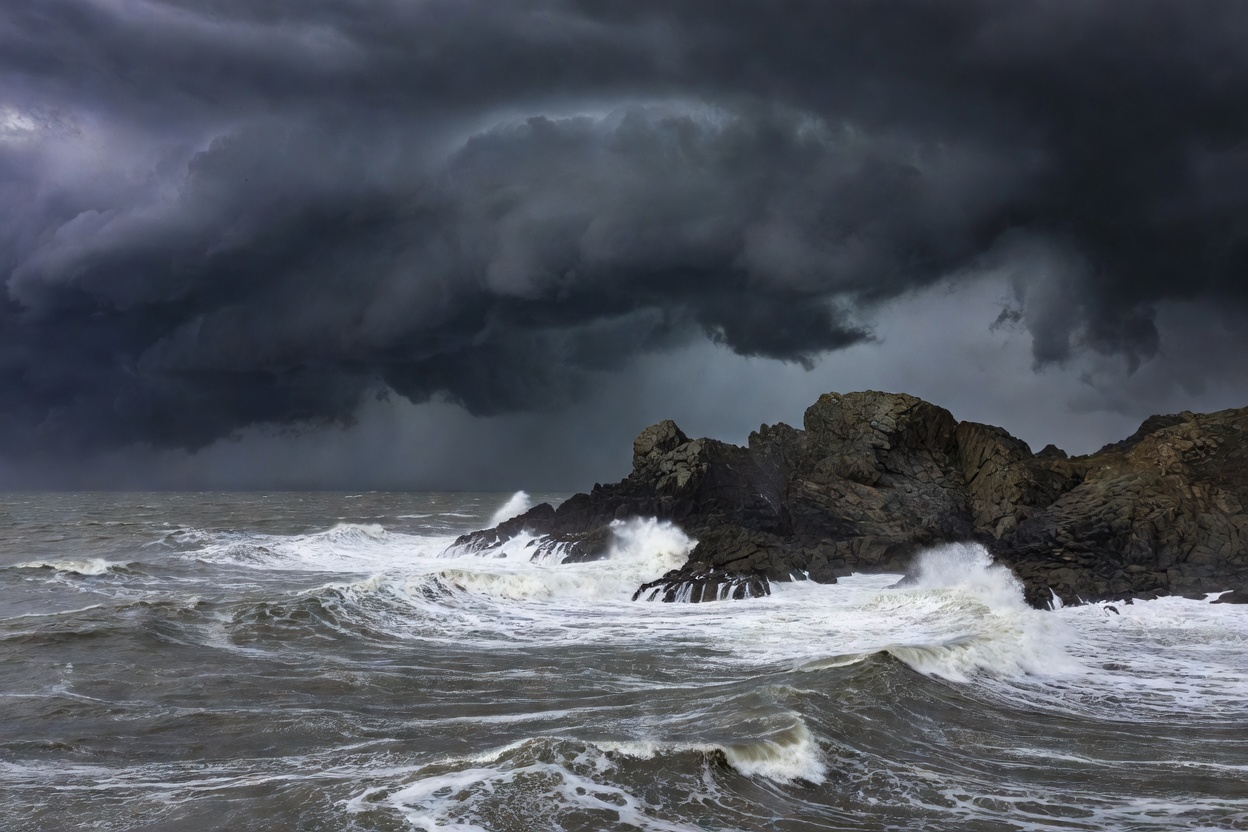
Hyper-maritime climate regimes produce rapid weather changes. Frontal systems pass quickly, bringing gale-force winds, horizontal rain, and sudden shifts in visibility.
The Subpolar Oceanic Climate Engine
The weather of smaller North Atlantic islands is governed by the boundary between warm maritime air carried northeast by the North Atlantic Current and cold Arctic air masses descending from the Greenland ice sheet. This clash fuels the primary North Atlantic storm track. Low-pressure cells deepen rapidly, producing frequent cyclonic storms that cross the ocean from southwest to northeast.
Because the surrounding ocean acts as an enormous thermal buffer, temperature extremes are moderated. Winter coastal temperatures rarely drop far below freezing (averaging 1°C to 4°C), while summer high temperatures seldom exceed 14°C to 18°C. However, high wind speeds create extreme wind chill factors year-round.
Wind Velocity, Gales, and Katabatic Gusts
Wind is the dominant environmental feature of all smaller North Atlantic islands. Without tree cover or continuous mainland topography to absorb momentum, airflows strike headlands with full ocean velocity. Wind speeds frequently exceed Force 7 to 8 on the Beaufort scale (30–40 knots) even during summer months.
Terrain accents this effect. Where high basalt mountains or steep cirques drop into narrow fjords, cold air cascades down vertical slopes. These katabatic winds (known locally as "scads" or "fallwinds") can strike a harbor water surface in seconds, turning a calm surface into flying white spray with gusts exceeding 60 knots.
Precipitation Dynamics and Fog Advection
Precipitation occurs on 200 to 280 days per year. It rarely falls as prolonged monsoon-style deluges; instead, it alternates rapidly between light drizzle, driving horizontal rain, graupel showers, and brief periods of clear sky. Moisture is driven horizontally into fabric seams and optical gear by prevailing winds.
Advection fog is another regular hazard. Warm, moisture-laden air drifting over cold northern currents cools to its dew point, producing dense sea fog (haar). This fog can roll across an island in 15 minutes, reducing visibility to under 20 meters and halting both STOL flight operations and island ferry berthing.
Seasonal Meteorological Profiles
| Season | Daylight Window | Mean Wind Regime | Dominant Hazard |
|---|---|---|---|
| Spring (Mar – May) | 11 to 17 Hours | Frequent northerly gales & squalls | Snow squalls / Late ground freeze |
| Summer (Jun – Aug) | 18 to 22 Hours | Moderate westerlies (12–25 knots) | Sudden sea fog advection (Haar) |
| Autumn (Sep – Nov) | 9 to 14 Hours | Severe cyclonic low passage | Ferry cancellations & coastal swell |
| Winter (Dec – Feb) | 4 to 7 Hours | Sustained gale cycles (Force 8–11) | High ocean swell & transport shutdown |
Mandatory Field Gear Checklist
Standard urban rainwear is inadequate for North Atlantic island conditions. Gear must withstand high winds, blowing horizontal spray, and saturated ground terrain:
- Outer Layer: Heavy-duty hardshell jacket and waterproof trousers rated to at least 20,000mm hydrostatic head with fully taped seams and an adjustable hood. Light ponchos tear immediately in Force 7 winds.
- Footwear: High-cut, waterproof leather or synthetic boots with deep lug soles (Vibram or equivalent) and gaiters to prevent peat water entering from above.
- Thermal Layering: Dense wool or heavyweight fleece mid-layers; avoid cotton garments, which lose all insulating capacity when damp.
- Navigation: Magnetic sighting compass and physical topographic paper map sealed in a waterproof case; do not rely solely on smartphones, as battery life plunges rapidly in cold wind.
Good For
- Witnessing dramatic high-energy maritime storm dynamics safely from shelter.
- Exceptional photographic light during rapid post-squall clearing windows.
- True operational testing of expedition gear, rainwear, and bivouac shelters.
- Extended summer twilight allowing long field walking days without darkness.
What To Know
- Always check official national maritime forecast services immediately before departures.
- Hypothermia can develop quickly even at 10°C when wind and rain penetrate outer clothing.
- Never camp on exposed ridge lines or below sheer scree cliffs vulnerable to rockfall.
- Sudden barometric drops require immediate descent from upland terrain.